The Creative Stretch

If you are driving to the grocery store couple of miles away from your home, your planning for the trip will be minimal compared to planning a cross-country road trip. For grocery store, a cursory look at the fuel gauge may suffice. For the road trip, if you have enough resources, you need extensive planning. Money, maintenance, weather and time all become considerations. The very notion of a destination far away forces you to think and plan differently – encouraging and even forcing to be creative.
Image

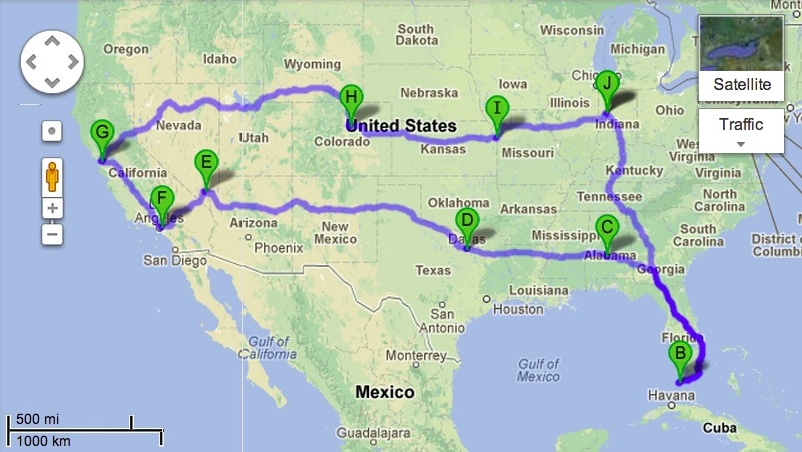
Our road trip 2003

Think of a startup. It is typically cash-strapped. One way forward is to grow organically. You depend on the revenues you generate. You build slowly while keeping the lights on. All investments are conservative and cautious. As you keep the liabilities to a minimum, you also limit the flexibility and freedom of action. You first ensure cash flow to sustain the monthly expenses before you think of hiring or availing that training opportunity.

The alternate path is to get external financing – say from a venture capitalist. You give up some of your equity in the company and have more stakeholders to answer to. But you also get this doze of welcome cash that lets you not worry about the next payroll or rent payment. Money is not a variable anymore at-least in the short term.  You have more space to be creative and think and plan big. With enough resources, you can plan a road trip rather than just be confined to visit to your local grocery store. You are encouraged – even forced – to be creative and think big. You can actually accomplish much bigger things.
Continue reading

Behaviors of Charisma

Thanks to the many top-notch universities opening up their learning resources online, we have access to some great stuff. One of these is Stanford’s eCorner – their entrepreneurship resource center.

ImageThere is a great talk by Olivia Fox on “Building Your Personal Charisma”. What is fascinating is that she describes charisma as a set of behaviors that can be learned and executed. It’s not intrinsic, genetic or inborn as we tend to believe. This is a pivotal lesson about management and knowledge work in general – it’s a set of behaviors that can be learned and executed. Peter Drucker’s basic premise in “The Effective Executive” – probably the best management book ever – is that an executive’s job is to be effective and effectiveness can be learned.

Olivia says that we tend to believe that charisma – and similar attributes like leadership – are innate because they are shaped by circumstances very early in our lives. But they are just learnt – or not learnt – early. They are not innate. They can be learnt at any stage and adopted. Anyone can be charismatic – at least to some extent.

Continue reading

Leverage the mavens

A very dear friend of mine – let’s call him Jake – is a fanatic when it comes to cars. He is an expert on cars. His knowledge and insight is brilliant. He loves cars. He gets seduced by them. He reads about them. He researches them. He gets passionate when they come up for discussion. He probably dreams about them too. He has all episodes of Top Gear recorded twice – just in case he loses one of them. Associate a car with any activity and he will be game for it, no matter how disinterested he is with the activity itself.

Someone asked me if he also loves dogs too. Somehow, the guys who love cars tend to love dogs too. Well, I think he probably does – provided its a dog with a car.

But there is something else about Jake that differentiates him from other car fanatics. And it is certainly not dogs. Jake is not just an expert on cars. He wants to share his expertise too. He loves to help others with their car hunt. He is always ready to go on a car inspection. He will take your car to the workshop too. He can actually hold a half-hour conversation about cars with someone whom he hates otherwise. He expects nothing – absolutely nothing – in return for sharing his car expertise.

ImageJake is a car maven. Not a consultant. Not an advisor. Not the middle man for car sales. A car maven. A maven is an expert on a subject who has an extreme intrinsic desire to help others related to it. Jake just does not know about cars. He loves to help others about them as well. That is what differentiates him from other car experts.
Continue reading

The New Manager and the P-A-C

It may sound nerdy but I love models and applying them wherever I can. They give me a structure to make sense of a situation and pursue a solution. I do not have to reinvent the wheel. Someone has already thought through similar situations and may have prescribed what to do. It is if I am standing clueless in a totally alien land and suddenly been handed a guide-book with a map. I still have to find the way but it is much easier. A model will make me think more, skip less and act effectively. The key is to apply the correct model and be open to tweaking it. If I am starting a new team, devising strategy for a chess game, making a decision to switch jobs, evaluating how to budget the next quarter or to manage my investments, I look for a model that I can apply. This is what the organizations do. This is definitely what the researchers do. We build on what we already know and formulated rather than starting from scratch (and repeating the mistakes). 

Hence, whenever I am reading a book, attending a training or talking to someone who knows more than me, I am always on the lookout for a new model or a tool. I try to extract from all the details, anecdotes and discussions the underlying models and tools and add them to my armory.

Image“I’m OK-You’re OK” by Thomas Harris is a great self-help book that makes people understand themselves and how they function. It helps them living a better life by immensely improving their personal and business communications. It’s a bit dense but classic read. My best takeaway from the book was the “P-A-C model” which is the basis for the overall framework that Thomas offers. P-A-C stands for Parent-Adult-Child (always start from Caps). 

Continue reading

Communication is what the listener does

My last post got me thinking about this even more: Communication is what the listener does. That’s what Peter Drucker told us.

We treat communication as talking, speaking, writing, emailing, posting, updating. We think of notice boards, bulletin boards, lectures, monologues, no-reply mass emails, broadcasts, multicasts and delivering messages.

So what is wrong with this? Well nothing – other than that it is at best incomplete and at worst misleading. Communication is all of the above – and much more. They are all necessary but not sufficient for communication. Image

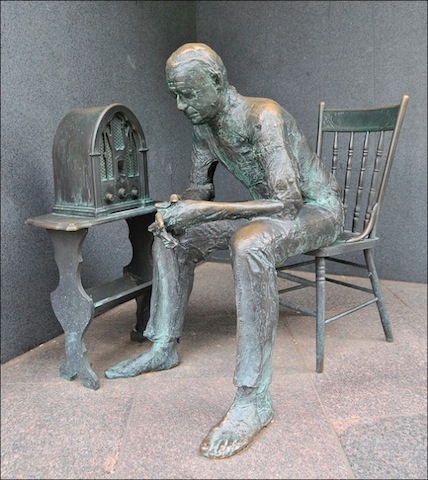
A professor of mine told us once that his job – or for that matter job of any teacher – is first to get down to the intellectual level of his audience, the students, talk to them in a language they understand and make them ask questions. It is not easy to do so because it requires first knowing the intellectual level and capacity of those being taught and second to talk to them in a language and structure that they can absorb. A teacher talking at her intellectual level far above that of students in a class room is like a radio channel transmitting at a frequency that no one can tune to.

Continue reading