Parkinson’s Law to our Advantage

The United States Congress averted a major tax hike and expenditure cut – the so-called “fiscal cliff” – by reaching a compromise deal just before the deadline of January 1, 2013. “Just before” practically was the start of January 1.

It was a tough milestone considering there was a divided Congress and political polarization on economic issues. However, the deadline was known for ever, practically built into the system and the backdoor negotiations for the compromise deal were in full swing for many weeks. Yet, the deal was reached at the eleventh hour – only when the hard deadline was at the door. Interestingly, there have been similar eleventh hour deals on fiscal deadlines over the last few years.

parkinsonThis is an example of Parkinson’s law in real life – famously known as Work Expands to Fill the Time Available. Everyone involved kept on negotiating and trying to get their way in the deal until they could do that no more. Usually, we expand the work required to achieve some goal based on how much time we have. We adjust our focus and plans accordingly. We define the complexity and scope of the task if we can based on how much time we have.

There are many other real-life examples. Cricket matches finish in the last over. Projects end at the last minute. All news in the world magically fits into the same 16 pages of a newspaper. Meetings consume all their allotted time. We reach office just in the nick of time. Deals are reached at the last minute. Storage requirements increase to fill the storage capacity. Our expenses adjust to fit our income.  Given any deadline or constraint, we carve an execution path in such a way that we finish right at the end. Not before, not after.

There are two very interesting corollaries for Parkinson’s Law.

Continue reading

The Creative Stretch

If you are driving to the grocery store couple of miles away from your home, your planning for the trip will be minimal compared to planning a cross-country road trip. For grocery store, a cursory look at the fuel gauge may suffice. For the road trip, if you have enough resources, you need extensive planning. Money, maintenance, weather and time all become considerations. The very notion of a destination far away forces you to think and plan differently – encouraging and even forcing to be creative.

Image

Our road trip 2003

Think of a startup. It is typically cash-strapped. One way forward is to grow organically. You depend on the revenues you generate. You build slowly while keeping the lights on. All investments are conservative and cautious. As you keep the liabilities to a minimum, you also limit the flexibility and freedom of action. You first ensure cash flow to sustain the monthly expenses before you think of hiring or availing that training opportunity.

The alternate path is to get external financing – say from a venture capitalist. You give up some of your equity in the company and have more stakeholders to answer to. But you also get this doze of welcome cash that lets you not worry about the next payroll or rent payment. Money is not a variable anymore at-least in the short term.  You have more space to be creative and think and plan big. With enough resources, you can plan a road trip rather than just be confined to visit to your local grocery store. You are encouraged – even forced – to be creative and think big. You can actually accomplish much bigger things.

Continue reading

Real Life Mavens – Evernote Ambassadors

Remember mavens as people who are experts in a particular subject and are willing and eager to help others without any expectations of return.

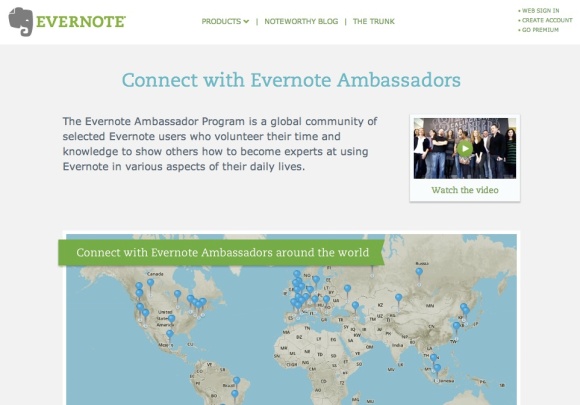
Well, I being an avid user of Evernote (specifically to manage my GTD way of life) I found this fascinating example of real world mavens – Evernote Ambassadors. These are passionate users of Evernote application who have volunteered to help other users to adopt or get better at using Evernote as a tool to capture, organize and archive information.

Image

All of them must be loving helping others and Evernote has done a very smart move to leverage their mavens!

Note better

Remember the university days with long lectures in even longer afternoons? Somehow a metric of being attentive was taking notes – lots and lots of notes. You looked busy and felt smarter. The more your scribbled the better you felt. You used to take notes with a propensity that could make a journalist who forgot his recorder at home envy you.

taking_notesAs the semester progressed, your notebook grew fatter and you happier. You felt confident that this mountain of text just needs a cursory glance at any time and the entire lecture would replay in your mind. After all you wrote it and there is so much of it. Heck, you can even give the notebook back to the professor as a souvenir. So you wade through the semester and slept in comfort with the knowledge that you have your savior.

The only problem was that when you actually reviewed your notes later they did not make much sense. You can recognize your handwriting – after all who can write that awfully bad. But you cannot understand it. You seem to be gazing at this mass of text that is coming out of the page and simply caressing those areas of your brain that deal with solving cryptographic puzzles.

Apart from many other things that can be contributing to this unsavory situation, a major one is the lack of structure in your notes. Your focus was on recording the words spoken – and that too as much as possible. More the better. While it started neatly left to right, top to bottom but soon you were patching white spaces – as if any white space left would mean something missed. You did not realize that your scribble speed was far less than the professor’s delivery, so there may be pieces of the lecture that you may have completely missed in your enthusiasm to fill the notebook. You are neither here nor there.

Ouch!

Continue reading

Leverage the mavens

A very dear friend of mine – let’s call him Jake – is a fanatic when it comes to cars. He is an expert on cars. His knowledge and insight is brilliant. He loves cars. He gets seduced by them. He reads about them. He researches them. He gets passionate when they come up for discussion. He probably dreams about them too. He has all episodes of Top Gear recorded twice – just in case he loses one of them. Associate a car with any activity and he will be game for it, no matter how disinterested he is with the activity itself.

Someone asked me if he also loves dogs too. Somehow, the guys who love cars tend to love dogs too. Well, I think he probably does – provided its a dog with a car.

But there is something else about Jake that differentiates him from other car fanatics. And it is certainly not dogs. Jake is not just an expert on cars. He wants to share his expertise too. He loves to help others with their car hunt. He is always ready to go on a car inspection. He will take your car to the workshop too. He can actually hold a half-hour conversation about cars with someone whom he hates otherwise. He expects nothing – absolutely nothing – in return for sharing his car expertise.

ImageJake is a car maven. Not a consultant. Not an advisor. Not the middle man for car sales. A car maven. A maven is an expert on a subject who has an extreme intrinsic desire to help others related to it. Jake just does not know about cars. He loves to help others about them as well. That is what differentiates him from other car experts.
Continue reading

Analyzing the Past

We collect piles of data over the years. We have an archive of emails, documents, snaps, cards – everything. We do it so that we can reference or reuse our “stuff” later – for example we can refer back to an email conversation 5 years ago. We even do it because we feel good about all this ‘past’ sitting with us. However, hardly we use it to get an insight into what has happened. We do not think we can learn from this huge repository. Sometimes its the lack of tools. But believe me this can be a treasure trove.

I am fond of collecting stuff – but also to make some sense out of it later. Even if it is just for fun. I like to be able to identify any trends, patterns or behaviors from what I have and see if there is something insightful lurking there. You simply cannot trust your memory or raw brain to do that processing for you. It’s not cut for bulk processing and data mining.

Wordle is a nice tool that lets you analyze large amount of text and visually display most commonly occurring words – in a very visually appealing manner. The source text can be raw text or even sources on web that have an RSS feed. So, if I analyze my blog, here is what Wordle tells me: Continue reading

It Depends – 2

Last time I wrote that there is no such thing as a perfect process to manage projects that is universally applicable.

Let’s extend that 20,000 feet project management guide to a 50,000 feet life management lesson.

Situations we face in life everyday demand applying various tools, techniques or processes – whether to handle a particular conversation delicately or forcefully; whether to make a huge short-term investment or a smaller long-term one; which person to hire for a key executive position – going with the interview assessments or with your gut feeling; which mathematical formula to apply to solve a particularly nagging problem; which financial model to use for budgeting the next year; which process to apply for a complex new project.

All of these situations require making a decision about selecting a tool, technique, quirk or a systematic process for a situation. There is no-one-size-fits-all approach – different situations require different solutions.

Equally, if not more important, is the realization that you need to have more than one tool in your toolbox to be able to successfully handle whatever life throws at you. No handyman can work with just a single tool. He is continuously diving in and out of his toolbox (that is a fascination to observe). A skilled handyman with his toolbox is a perfect model for how we can handle different situations in life everyday.

I could have spared you all the above read if I had simply quoted the following (but then I would not have been able to call it a blog post!)

“If the only tool you have is a hammer, you tend to see every problem as a nail”

It Depends!

I am a hardcore Agile guy! I love Scrum. I have been a Scrum ‘evangelist’ (whatever that means) and the Scrum go-to guy for years. Agile is the way forward. It’s the best process to manage your software projects. Heck, it’s the best way to manage any project.

Hold on. Any project? All scenarios? No exceptions?

One of my professors in graduate school told us that the art of effective teaching is in stimulating students’ brains – by continuously asking questions, soliciting feedback and making them think. A question of his would bring up a perfectly reasonable answer – only to be added on by another perfectly reasonable answer. Soon, answers to most of the questions posed by the professor started with “Well, It depends”.

“It depends!” Even with all the laughter that such answer had, we started to get the game. The world started to make more sense.

There can be two – or even more – perfectly palatable answers to questions of the form “What is the best way here?“. They are pivoted differently only by the context. They differ by what they depend on. Image
Continue reading